
📑 Table of Contents
- Why Bhimashankar is both a pilgrimage and a nature visit
- Temple timings: check the trust’s posted schedule
- Mumbai road planning: keep the return on a separate day
- Forest, monsoon and physical-effort checks
- What to confirm before enquiring about the car
- Enquiry checklist
- FAQs
- What are the current Bhimashankar Temple darshan timings?
- Can I visit Bhimashankar from Mumbai in one day?
- Is a forest trek required for darshan?
- Is Bhimashankar suitable during the monsoon?
- Where should we stay overnight?
- Plan darshan and the drive separately
- Sources and further reading
- Plan your Mumbai-origin journey with the right checks
A visit to Bhimashankar needs two separate plans: the road journey from Mumbai and the time you need at the shrine. Set in the forested Sahyadri landscape, the temple is revered as one of Lord Shiva’s twelve Jyotirlingas. A Mumbai-origin chauffeur-driven car can help coordinate a multi-day journey, but it does not remove the need to check the temple schedule, road conditions, overnight arrangements or current forest access.
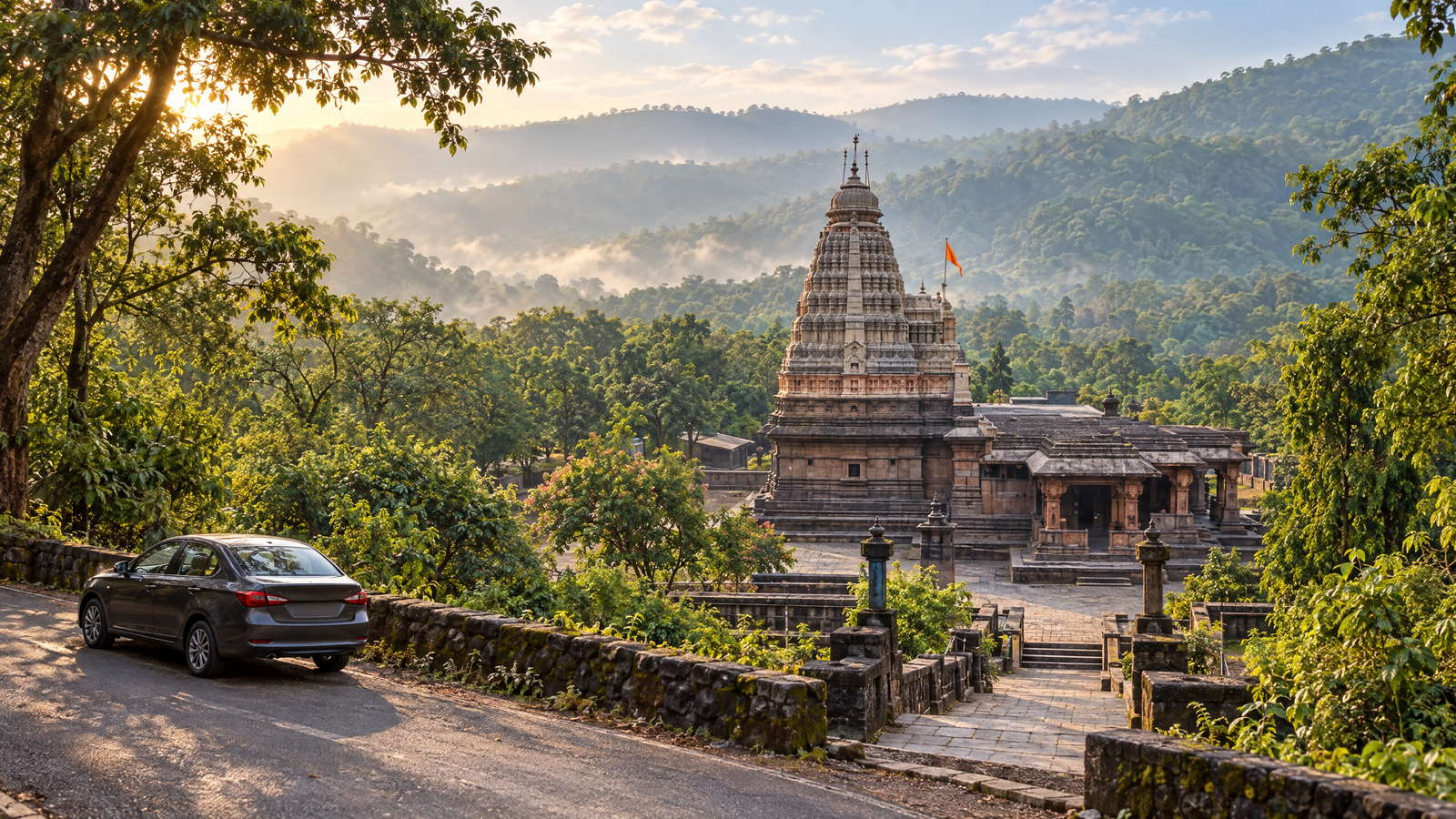
For most groups, an overnight itinerary is a more sensible starting point than a same-day Mumbai return. Allow separate time for darshan, meals and rest. Treat a forest walk or trek as an optional activity that requires its own check with the responsible authority; it is not part of ordinary temple darshan by default.
Why Bhimashankar is both a pilgrimage and a nature visit
Maharashtra Tourism’s Bhimashankar guide describes the destination as a pilgrimage site in the Sahyadri hills and identifies its temple as one of the twelve Jyotirlingas dedicated to Shiva. The Shree Kshetra Bhimashankar Trust recounts the shrine’s association with Shiva’s defeat of Tripurasura and the origin of the Bhima River. These are religious traditions, not claims of independently verified history. The temple’s stone architecture and forested setting make the visit different from a city shrine.
The surrounding landscape is also protected. The Maharashtra Forest Department’s Pune jurisdiction page lists Bhimashankar Wildlife Sanctuary under a Wildlife Division in the Pune Territorial Circle. This establishes the relevant authority context; it does not confirm current public trail access, permits, hours or closures. A trail or viewpoint shown on a map should not be assumed open. Ask the responsible forest authority before adding any activity beyond the temple visit, and do not plan around seeing a particular animal.
Temple timings: check the trust’s posted schedule
The temple trust’s posted, dynamic schedule page, checked on 10 November 2026, lists this regular daily programme. These are the trust’s published times, not a guarantee that darshan or rituals will run unchanged on your visit date. Festival programmes, special observances, crowd controls or other notices can affect access. Recheck the official temple schedule for your trip date before travelling.
| Posted time | Programme shown by the trust |
|---|---|
| 5:00 a.m. | Temple opens; worship follows until 5:30 a.m. |
| 5:30 a.m.–12:00 noon | Darshan and Abhishekam |
| 12:00–12:20 p.m. | Naivedyam puja |
| 12:20–2:45 p.m. | Darshan and Abhishekam |
| 2:45–3:20 p.m. | Worship |
| 3:20–7:30 p.m. | Dev Darshan |
| 7:30–8:00 p.m. | Worship |
| 8:00–9:30 p.m. | Dev Darshan; temple closes at 9:30 p.m. |
Aim to arrive with a buffer rather than targeting the last listed darshan period. The trust’s posted guidance advises visitors to follow temple procedures, wait their turn, keep the premises orderly and remove footwear in and around the temple premises. Confirm current footwear, dress, photography, phone, bag and identity-document rules directly with the temple. International visitors should not assume a passport or other document satisfies any temple-specific requirement without checking first.
Mumbai road planning: keep the return on a separate day
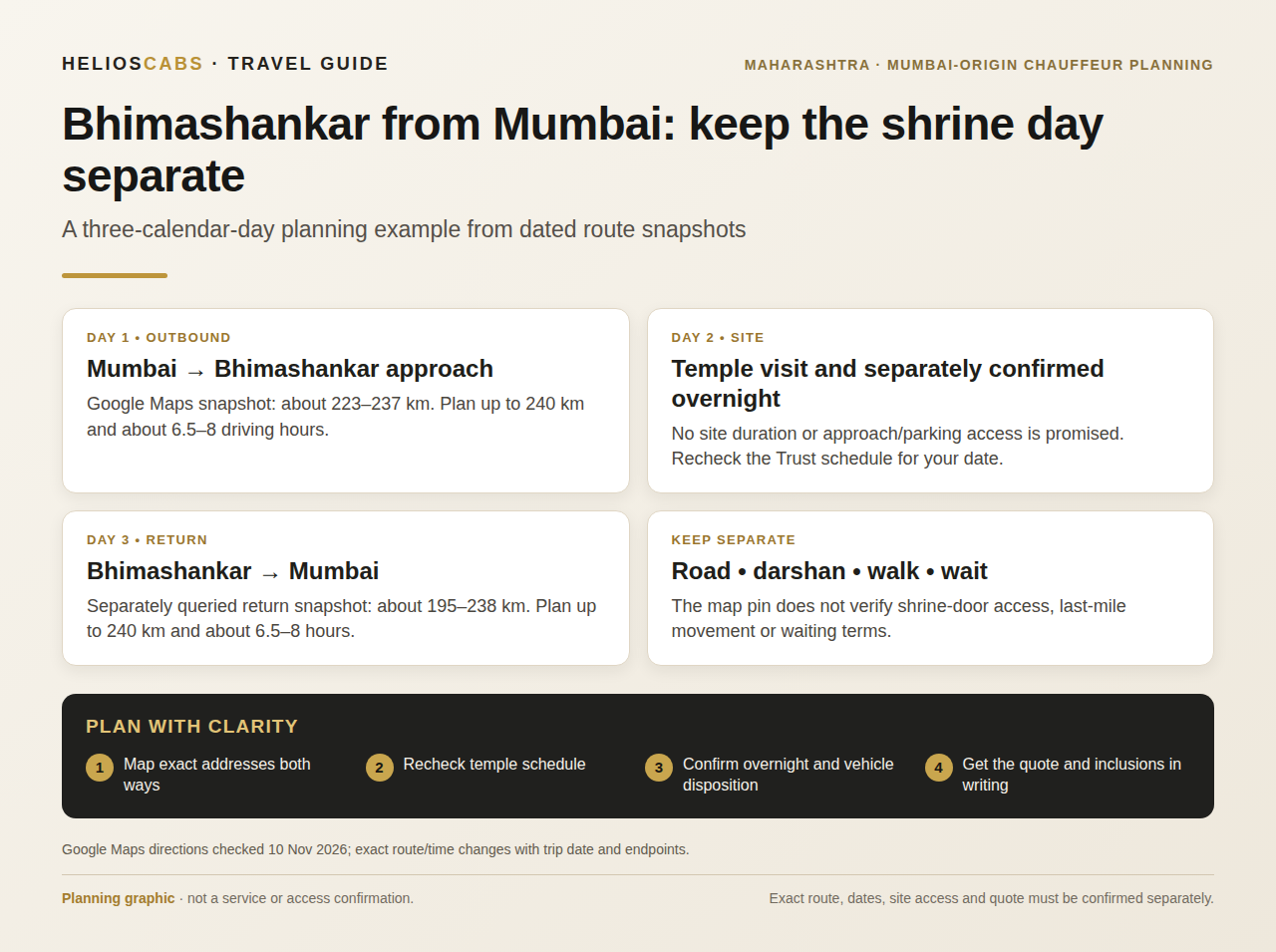
The independent Google Maps snapshots checked on 10 November 2026 separately routed both directions between the Saki Naka/Aerocity area and a Bhimashankar temple-approach pin. The figures are approximate public-map snapshots, not a garage-to-garage quote, live traffic forecast or arrival promise. The conservative guide planning envelope is up to 240 road km and about 6.5–8 driving hours for each road day.
| Calendar day | Road and visit structure | Approximate map distance and planning time |
|---|---|---|
| Day 1 — Mumbai to Bhimashankar: outbound snapshot | Outbound road journey. Confirm an appropriate overnight arrangement for after arrival before travel; no property or access is implied. | About 223–237 km; plan for up to 240 km and about 6.5–8 driving hours. |
| Day 2 — Separate temple visit and overnight | Keep the shrine visit on its own calendar day. Confirm any continued overnight arrangement separately. | No road distance or site duration is assumed here; darshan and any queue or walk are separate from map driving time. |
| Day 3 — Bhimashankar to Mumbai: separately routed return snapshot | Return by road; this direction was checked independently, not inferred from the outbound route. | About 195–238 km; plan for up to 240 km and about 6.5–8 driving hours. |
The map results end at a public-road/temple-approach pin. They do not verify car access to the shrine door, last-mile access or parking. The older Google Maps Mumbai-to-Bhimashankar view is also dynamic; recheck both directions for the exact addresses and travel date before service confirmation. Site time, darshan, queues, meals, walking, any forest activity and driver waiting are separate from map driving time and require their own checks.
For this guide, the wave’s editorial planning screen is to keep each calendar day at or below 400 road km or 12 driving hours, with 325–350 km preferred when a full driving day is needed. This is planning guidance only—not a binding Helios policy, quote rule or service promise. Helios Operations must review the exact pickup and drop addresses, trip date, route, garage movement and daily driving assumptions before confirming a service or quote. Darshan, queues, meals, walking and any forest activity remain separate from driving time.
Forest, monsoon and physical-effort checks
Maharashtra Tourism describes the Shidi Ghat route as steep and Ganesh Ghat as more gradual. These are trekking options, not requirements for ordinary temple darshan and not assurances that a trail is open or suitable on your date. Contact the forest authority before setting out. Do not enter a closed or restricted area, feed or approach wildlife, or rely on a sighting. The Maharashtra Tourism Bhimashankar page and Forest Department jurisdiction page provide background and authority context, not live trail-status confirmation.
During the monsoon, Maharashtra Tourism warns that trails can become slippery. Rain, mist and road advisories can make a map estimate irrelevant. Check current conditions, allow extra time and skip optional walks unless officially accessible and safe.
For elders, young children and anyone with limited stamina or mobility, consider the complete visit: road travel, walking and standing in a queue, footwear arrangements, and any steps or uneven surfaces. Ask the temple about current access arrangements rather than assuming an accessible entrance, seating, queue accommodation or assistance is available. A chauffeur-driven car can help the group travel together from Mumbai; it cannot guarantee site access or replace a mobility assessment.
What to confirm before enquiring about the car
Share the actual Mumbai pickup point, travel dates, intended calendar days, passenger count, luggage and any mobility considerations. Ask for a written route review that separates road kilometres and driving time by day from darshan, waiting, walking and forest activity. Confirm proposed overnight regions before making non-refundable hotel or onward-travel commitments.
Vehicle category and fit, driver assignment, language preference, availability, tolls, parking, waiting, overnight arrangements and the final quote all require confirmation. A chauffeur booking does not include temple services, darshan priority, permits, forest access, a guide, accommodation or a safari unless the relevant authority and written booking separately confirm them. Do not assume a vehicle will wait while the group visits the temple.
For wider planning, compare this destination with the Mumbai–Maharashtra pilgrimage circuits guide and the five-Jyotirlinga circuit from Mumbai when those same-wave pages are staged at their exact canonicals. Existing contextual reading includes the Mumbai–Nashik and Trimbakeshwar chauffeur guide and the Ashtavinayak Yatra guide. To discuss a Mumbai-origin multi-day journey, use Mumbai outstation car rental, read the outstation travel guidance, or contact HeliosCabs. An enquiry is not a booking confirmation.
Enquiry checklist
Journey: Mumbai to Bhimashankar Jyotirlinga; proposed round trip or other plan
Travel dates and total calendar days:
Mumbai pickup address and preferred departure window:
Passenger count, children’s ages and mobility considerations:
Luggage count and approximate sizes:
Temple darshan date and any fixed visit plan:
Forest walk or trek requested? If yes, which route and what authority check is pending?
Preferred overnight region(s); accommodation arranged or still needed:
Mumbai return date and preferred arrival window:
Any onward travel or connection that needs a buffer:
Please confirm daily road kilometres, estimated driving hours and garage movement:
Please confirm vehicle/category, passenger and luggage fit, driver and service coverage:
Please state what is included/excluded: tolls, parking, waiting, overnight duty,
accommodation, permits or other requested items:
Contact number and preferred follow-up channel:
FAQs
What are the current Bhimashankar Temple darshan timings?
The trust’s regular schedule lists opening at 5:00 a.m., darshan periods from 5:30 a.m. with worship and Naivedyam intervals, and closing at 9:30 p.m. Check the official schedule again for festival or date-specific notices.
Can I visit Bhimashankar from Mumbai in one day?
Do not make a Mumbai same-day round trip the default. The independently routed outbound and return snapshots each allow about 6.5–8 driving hours in the conservative guide plan, while darshan, queues and breaks are separate. Use the three-calendar-day outline and have Operations check the exact route and dates before confirming a service.
Is a forest trek required for darshan?
No. Do not assume a trek is part of a temple visit. Maharashtra Tourism describes separate trekking routes, but current access and suitability must be checked with the Forest Department.
Is Bhimashankar suitable during the monsoon?
Maharashtra Tourism notes that trails can be slippery. Verify current weather, road and trail conditions with the responsible authorities. Skip optional walks if conditions or your group’s comfort are uncertain.
Where should we stay overnight?
Choose a Pune-side or temple-side stay only after checking route feasibility, property availability, access and the full chauffeur arrangement. This guide does not promise accommodation or overnight vehicle service.
Plan darshan and the drive separately
Start with the temple trust’s schedule, then decide how much road travel and walking your group can comfortably manage. Send HeliosCabs your Mumbai pickup, dates, passenger and luggage details, and overnight preference through the Mumbai outstation enquiry page or contact page. Request a written, date-specific chauffeur plan with daily driving checked separately from darshan and any forest activity. Temple access, forest permission, accommodation, vehicle and driver availability, waiting, parking and the final quote remain subject to confirmation.
Sources and further reading
- Maharashtra Tourism’s Bhimashankar guide
- Shree Kshetra Bhimashankar Trust
- Maharashtra Forest Department’s Pune jurisdiction page
- official temple schedule
Plan your Mumbai-origin journey with the right checks
Share your dates, exact pickup and destination addresses, preferred stops, travellers and luggage, and how many calendar days you have. HeliosCabs can review the proposed chauffeur-driven road journey and confirm route, service coverage, vehicle suitability, availability and written terms before you rely on a plan. Site entry, darshan, boats, permits, accommodation and activities remain subject to their respective authorities or providers.
Share this article:

Leave a Reply